



















onsemi NST817 General Purpose NPN Transistors
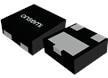
onsemi NST817 General Purpose NPN Transistors are designed for a wide range of electronic applications, commonly, low-voltage switching, amplification, and signal processing. These devices are housed in a DFN1010-3 package offering superior thermal performance. With moderate current handling capabilities, the onsemi NST817 excels in tasks such as driving relays, switching logic signals, and serving as a signal amplifier in both audio and small-signal circuits. Reliable performance also makes the NST817 suitable for use in oscillator circuits, current regulation, and biasing networks. With broad functionality, the NST817 finds use in diverse electronic devices, from consumer electronics to industrial control systems, providing a reliable solution for circuit designs requiring efficient and effective transistor operation.
Features
- XDFNW3 wettable flank package for optimal Automated Optical Inspection (AOI)
- NSV prefix for automotive and other applications requiring unique site and control change requirements, AEC-Q101 qualified and PPAP capable
- Moisture Sensitivity Level (MSL) 1
- Lead-free, Halogen-free/BFR-free, and RoHS-compliant
Applications
- Switching circuits
- Amplification
- Oscillator circuits
- Current regulation
- Amplifier stage in linear applications
- Biasing circuits
- Digital logic circuits
- Voltage regulation
- Power control
- Transistor-based sensors
Specifications
- 45VDC maximum collector-emitter voltage
- 50VDC maximum collector-base voltage
- 5.0VDC maximum emitter-base voltage
- 100nA maximum collector-base and emitter-base cutoff current
- Small signal
- 180MHz typical transition frequency
- 4.2pF typical output capacitance
- 52pF typical input capacitance
- 15k typical input impedance
- 0.75dB typical noise figure
- Switching characteristics
- 9.8ns typical delay time
- 13ns typical rise time
- 483ns typical storage time
- 48ns typical fall time
- 350mW total power dissipation at TA = +25°C, 2.8mW/°C derating above +25°C
- 145°C/W junction-to-ambient thermal resistance
- -65°C to +150°C junction temperature range
Schematic

Related Transistors
onsemi NST807 General Purpose PNP Transistors
High performance, reliable transistors with a low saturation voltage and fast switching speeds
Published: 2025-02-26
| Updated: 2025-03-04