




NXP Semiconductors CAN Signal Improvement
NXP Semiconductors CAN Signal Improvement Capability (SIC) technology is designed to overcome the limitations of CAN FD (Controller Area Network Flexible Data Rate). While CAN FD boosts the throughput of CAN, the accelerated bit rates create signal integrity problems, significantly limiting its achievable data rate in the topologies that vehicle makers ultimately require. NXP's CAN SIC transceivers resolves these limitations and accelerate CAN FD beyond what was previously possible, expanding the potential for this technology.
NXP's CAN SIC technology is a highly robust and high-performance solution, enabling both much higher bit rates, while delivering the reliability of communication that conventional transceivers have been delivering for years. NXP's solution, as implemented in the TJA146x CAN SIC transceiver series, is based on a new and highly symmetrical transmitter, which is both reliable and allows for tighter control over the transmitted signal. This results in greatly improved ringing performance and shorter bit times, unlocking increased topology freedom and CAN communication up to 8Mbps.
The TJA146x transceiver is a pin-to-pin and drop-in replacement for existing CAN solutions. As it fulfills the ISO 11898-2:1029 specifications, it allows simple upgrades for existing designs. Besides that, the TJA146x series fully embody the CiA 601-4 2.0.0 specification.
Benefits
- Expand CAN FD network capabilities
- HS CAN and CAN FD up to 8Mbps
- Actively improves ringing performance
- Enables increased network size and flexibility
- Increased EMC performance
- AEC-Q100 Grade-1 (125°C) and Grade-0 (150°C) options
- Backwards compatible
- Drop-in replacement for existing CAN solutions
- Minimal/no software changes required
- Compliant to CiA 601-4, ISO 11898-2:2016, SAE J2284-1 to SAE J2284-5, and SAE J1939-14
Applications
- Automotive
- Trucks and Buses
- Industrial and Factory Automation
- Mobile Robotics (UAVs, Rovers)
- Medical
Featured Products

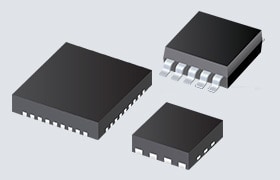
NXP Semiconductors TJA1462 & TJA1463 CAN FD SIC Transceivers
Drives CAN FD signals with active signal improvement, eliminating signal ringing in a network.
Development Tools

NXP Semiconductors KIT-UCANS32K1SIC CAN SIC Evaluation Kit
CAN Signal Improvement Capability (SIC) reference design based on the TJA1463 CAN SIC Transceiver.
Resources
Videos
Signal Ringing

TJA1462 Block Diagram
