

UCC27332QDGNRQ1

Texas Instruments
595-UCC27332QDGNRQ1
UCC27332QDGNRQ1

Mfr.:

Description:
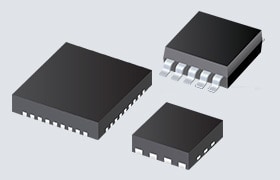
Gate Drivers Automotive 9-A/9-A s ingle-channel gate

ECAD Model:
Download the free Library Loader to convert this file for your ECAD Tool. Learn more about the ECAD Model.

In Stock: 816

Stock:
816 Can Dispatch Immediately
Factory Lead Time:
12 Weeks Estimated factory production time for quantities greater than shown.
Minimum: 1   Multiples: 1
Unit Price:
-,-- kr.
Ext. Price:
-,-- kr.
Est. Tariff:

Pricing (DKK)

Qty. Unit Price
Ext. Price
13,06 kr. 13,06 kr.
9,62 kr. 96,20 kr.
8,80 kr. 220,00 kr.
7,83 kr. 783,00 kr.
7,38 kr. 1.845,00 kr.
7,12 kr. 3.560,00 kr.
6,93 kr. 6.930,00 kr.
6,61 kr. 16.525,00 kr.
6,48 kr. 32.400,00 kr.

Product Attribute Attribute Value Select Attribute
Texas Instruments
Product Category: Gate Drivers
RoHS:  
Low-Side Drivers
Low-Side
SMD/SMT
HVSSOP-8
1 Driver
2 Output
9 A, 9 A
4.5 V
18 V
Non-Inverting
16 ns
11 ns
- 40 C
+ 125 C
UCC27332
Brand: Texas Instruments
Logic Type: TTL
Operating Supply Current: 150 uA, 3.9 mA
Output Voltage: 0 V to 18 V
Product Type: Gate Drivers
Propagation Delay - Max: 60 ns, 65 ns
Shutdown: No Shutdown
Factory Pack Quantity: 2500
Subcategory: PMIC - Power Management ICs
Technology: Si
Products found:
To show similar products, select at least one checkbox
Select at least one checkbox above to show similar products in this category.
Attributes selected: 0

This functionality requires JavaScript to be enabled.

CNHTS:
8542399000
CAHTS:
8542390000
USHTS:
8542390090
MXHTS:
8542399999
ECCN:
EAR99

UCC27332-Q1 High-Speed Low-Side Gate Driver

Texas Instruments UCC27332-Q1 Single Channel High-Speed Low-Side Gate Driver can effectively drive MOSFET and GaN power switches. UCC27332-Q1 has a typical peak drive strength of 9A, which reduces the rise and fall times of the power switches, lowering switching losses and increasing efficiency. The UCC27332-Q1 device’s small propagation delay yields better power stage efficiency by improving the dead time optimization, control loop response, pulse width utilization, and transient performance of the system.