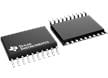

SN74HCT240N

Texas Instruments
595-SN74HCT240N
SN74HCT240N

Mfr.:

Description:
Buffers & Line Drivers Tri-State Octal

ECAD Model:
Download the free Library Loader to convert this file for your ECAD Tool. Learn more about the ECAD Model.

In Stock: 1.134

Stock:
1.134 Can Dispatch Immediately
Factory Lead Time:
6 Weeks Estimated factory production time for quantities greater than shown.
Minimum: 1   Multiples: 1
Unit Price:
-,-- kr.
Ext. Price:
-,-- kr.
Est. Tariff:

Pricing (DKK)

Qty. Unit Price
Ext. Price
5,65 kr. 5,65 kr.
4,05 kr. 40,50 kr.
3,64 kr. 72,80 kr.
3,20 kr. 320,00 kr.
2,99 kr. 777,40 kr.
2,86 kr. 1.430,00 kr.
2,76 kr. 2.760,00 kr.
2,65 kr. 10.600,00 kr.
2,51 kr. 20.080,00 kr.

Product Attribute Attribute Value Select Attribute
Texas Instruments
Product Category: Buffers & Line Drivers
RoHS:  
HCT
8 Input
8 Output
Inverting
PDIP-20
- 6 mA
6 mA
8 uA
4.5 V
5.5 V
80 uA
- 40 C
+ 85 C
Through Hole
Tube
Brand: Texas Instruments
Country of Assembly: MY
Country of Diffusion: US
Country of Origin: MY
Logic Type: CMOS
Number of Channels: 8 Channel
Output Type: 3-State
Product Type: Buffers & Line Drivers
Propagation Delay Time: 42 ns at 4.5 V, 38 ns at 5.5 V
Series: SN74HCT240
Factory Pack Quantity: 20
Subcategory: Logic ICs
Unit Weight: 1,199 g
Products found:
To show similar products, select at least one checkbox
Select at least one checkbox above to show similar products in this category.
Attributes selected: 0

This functionality requires JavaScript to be enabled.

TARIC:
8542319000
CNHTS:
8542399000
CAHTS:
8542390000
USHTS:
8542390090
JPHTS:
8542390990
MXHTS:
8542399999
ECCN:
EAR99

SN74HCT240 Octal Buffers/Line Drivers

Texas Instruments SN74HCT240 Octal Buffers/Line Drivers are explicitly designed to improve the performance and density of clock drivers, 3-state memory address drivers, and bus-oriented receivers and transmitters. The Texas Instruments SN74HCT240 devices are organized as two 4-bit buffers/drivers with separate output-enable (OE) inputs. When OE is high, the outputs are in the high-impedance state. When OE is low, the device passes inverted data from the A inputs to the Y outputs.