
MIKROE-6010

Mikroe
932-MIKROE-6010
MIKROE-6010

Mfr.:

Description:
Multiple Function Sensor Development Tools EZO Carrier Click - Oxygen

Lifecycle:
New Product:
New from this manufacturer.

In Stock: 10

Stock:
10 Can Dispatch Immediately
Minimum: 1   Multiples: 1
Unit Price:
-,-- kr.
Ext. Price:
-,-- kr.
Est. Tariff:
This Product Ships FREE

Pricing (DKK)

Qty. Unit Price
Ext. Price
866,03 kr. 866,03 kr.

Product Attribute Attribute Value Select Attribute
Mikroe
Product Category: Multiple Function Sensor Development Tools
RoHS:  
Add-On Boards
Environmental, Gas
EZO-DO
3.3 V, 5 V
Brand: Mikroe
Dimensions: 57.15 mm x 25.4 mm
For Use With: Electrochemical Sensing
Interface Type: I2C, UART
Product Type: Multiple Function Sensor Development Tools
Factory Pack Quantity: 1
Subcategory: Development Tools
Products found:
To show similar products, select at least one checkbox
Select at least one checkbox above to show similar products in this category.
Attributes selected: 0

CAHTS:
9027100010
USHTS:
9027102000
JPHTS:
902710000
KRHTS:
9027100000
MXHTS:
9027100100
BRHTS:
90271000
ECCN:
EAR99

Sensor Click Boards

Mikroe Sensor Click Boards enable the addition of various sensors to applications and designs. Click boards™ are based around the mikroBUS™ interface standard and easily add incredible capabilities to systems. Mikroe Sensor Click Boards are ideal for any application that requires custom sensor capability. 

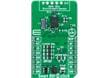
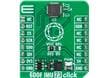
MIKROE-6010 EZO Carrier Click

Mikroe  MIKROE-6010 EZO Carrier Click is a compact add-on board designed to measure dissolved oxygen in liquids. The Mikroe  MIKROE-6010 features the ATLAS Scientific EZO-DO™ circuit board, compliant with ISO 5814 standards. This small yellow board, included with the carrier, provides oxygen readings from 0.01mg/L to 100mg/L at a level of precision of ±0.05mg/L at up to one reading per second. Ideal for electrochemical sensing, the device can also detect micro-voltages from external sources such as pumps or sensors. The board is compatible with various galvanic probes, including the ATLAS Scientific Conductivity Probe K 1.0.