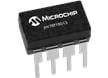

ATMEGA324PB-MUR

Microchip Technology
556-ATMEGA324PB-MUR
ATMEGA324PB-MUR

Mfr.:

Description:
8-bit Microcontrollers - MCU 20MHZ, QFN/MFL, IND TEMP, GREEN 5 V T&R

ECAD Model:
Download the free Library Loader to convert this file for your ECAD Tool. Learn more about the ECAD Model.

In Stock: 5.602

Stock:
5.602 Can Dispatch Immediately
Factory Lead Time:
4 Weeks Estimated factory production time for quantities greater than shown.
Minimum: 1   Multiples: 1
Unit Price:
-,-- kr.
Ext. Price:
-,-- kr.
Est. Tariff:
Packaging:
Full Reel (Order in multiples of 4000)

Pricing (DKK)

Qty. Unit Price
Ext. Price
Cut Tape / MouseReel™
14,70 kr. 14,70 kr.
13,50 kr. 337,50 kr.
12,23 kr. 1.223,00 kr.
Full Reel (Order in multiples of 4000)
12,23 kr. 48.920,00 kr.
† A MouseReel™ fee of 47,00 kr. will be added and calculated in your basket. All MouseReel™ orders are non-cancellable and non-returnable.

Alternative Packaging

Mfr. Part No.:
Packaging:
Tray
Availability:
In Stock
Price:
13,88 kr.
Min:
1

Product Attribute Attribute Value Select Attribute
Microchip
Product Category: 8-bit Microcontrollers - MCU
RoHS:  
VQFN-44
SMD/SMT
ATmega324PB
AEC-Q100
Reel
Cut Tape
MouseReel
Brand: Microchip Technology
Moisture Sensitive: Yes
Product Type: 8-bit Microcontrollers - MCU
Factory Pack Quantity: 4000
Subcategory: Microcontrollers - MCU
Tradename: AVR
Unit Weight: 2,249 g
Products found:
To show similar products, select at least one checkbox
Select at least one checkbox above to show similar products in this category.
Attributes selected: 0

This functionality requires JavaScript to be enabled.

TARIC:
8542319000
CNHTS:
8542319090
CAHTS:
8542310000
USHTS:
8542310075
MXHTS:
8542310302
ECCN:
EAR99

ATmega324PB Microcontrollers

Atmel ATmega324PB Microcontrollers are high-performance microchip picoPower 8-bit AVR® RISC-based microcontroller that combines 32kB ISP flash memory with read-while-write capabilities. These MCUs execute instructions in a single clock cycle and achieve throughputs approaching 1MIPS/MHz, balancing power consumption, and processing speed. The ATmega324PB MCUs operate at a 1.8V to 5.5V supply voltage range and operate within -40ºC to 105ºC temperature range. The ATmega324PB MCUs feature QTouch Peripheral Touch Controller (PTC) that acquires signals to detect the touch on capacitive sensors. These MCUs provide a faster and less complex capacitive touch implementation in any application.

Automotive 8-Bit Microcontrollers

Microchip Technology Automotive 8-Bit Microcontrollers include MCUs with the PIC® and AVR® architecture. Capturing the best features of both architectures enables Microchip to offer plentiful solutions for every type of automotive system. From Human Machine Interface (HMI) applications based on touch technology to underhood applications requiring high-temperature robustness to simple watchdog-type applications requiring a small form factor, users can find extensive options that meet specific requirements.

Touch & Gesture Products

Microchip Technology Touch and Gesture Products can be used to upgrade products to include a modern user interface. Add value and advanced features to applications by replacing mechanical push buttons with a touch- or gesture-controlled interface. Increase customer appeal and improve product performance and reliability. Microchip offers solutions for everything from single buttons, touchpads, and touch screens to proximity detection and 3D gesture control. Microchip Technology Touch and Gesture Products are ideal for various consumer, industrial, and automotive applications.

Functional Safety Solutions

Microchip Technology Functional Safety Solutions offer robustness, reliability, and safety to end-products. In some application segments, these requirements are formalized and mandatory, while in others, they are implemented to differentiate the product and take the step from a good product to an excellent product. The standards for functional safety depend on the market that is targeted. Many standards support multiple levels of rigorousness, which are applied depending on the likelihood and severity of the hazard. The methods of addressing hazards range from detecting single failures and putting the system into a safe state to full redundancy, where failures should not only be detected but also corrected without any interruption or degradation of service.